Choice
You decide. What you eat, who supports you, how your day is shaped, and what you get to say no to. A life you did not choose is not made better by being well-run.
Tender Hand Healthcare Services
Accessibility at THHS
Accessibility & Inclusion
Most people hear “accessibility” and picture a ramp. A ramp is a fine thing. But a ramp only gets you into the building — it does not tell you whether anyone inside was expecting you.
We mean the second part.

Access is not the achievement. Access is what makes the achievement possible.
01 / Access to life
A person can be perfectly “accommodated” and still have nothing to do on a Tuesday.
That is the failure most systems do not count. Every box ticked, every form in the right format, every doorway wide enough — and a life that is safe, supervised, and empty.
Accessibility, if it means anything, has to be measured at the other end. Not did we let them in, but did their life get bigger.
So we ask a different question about every support we provide: what does this open?
If the answer is nothing — it just keeps things running, then it is maintenance, not care. Useful, sometimes necessary, but not the point. The point is a life with more in it than there was before.
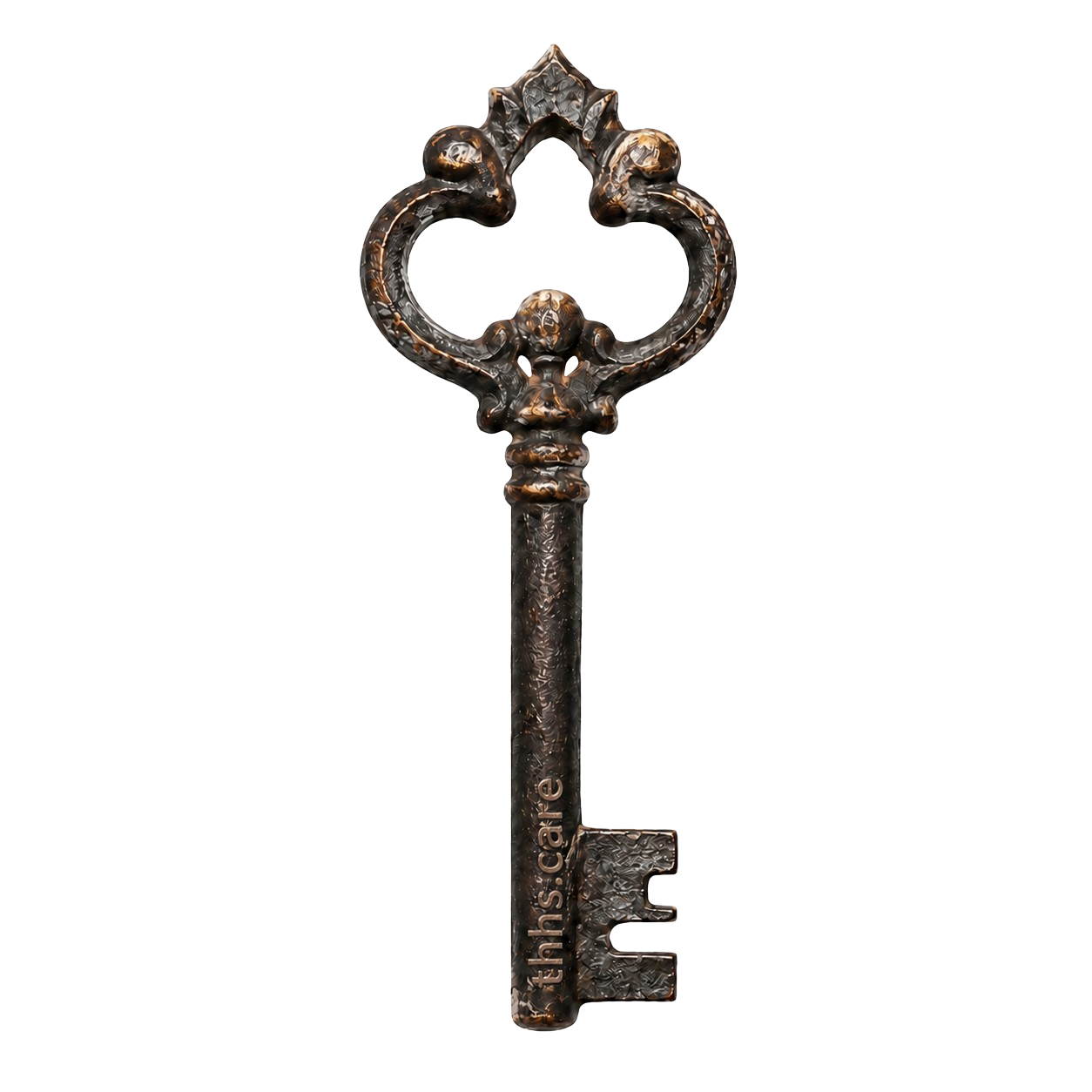
02 / The door and the key
Here is what we have learned, over and over: the door is almost always already there.
The job exists. The apartment exists. The bowling league meets on Thursdays and would be glad to have another player. The person we support already knows exactly where they want to go — that is rarely the missing piece.
What is missing is the key.
The ride that shows up. The form rewritten so it can be understood. The aide who knows, on day one, how you take your coffee and which side you brace on. The interview practiced four times in a quiet room. The schedule that bends around a doctor’s appointment instead of cancelling it.
None of that is dramatic. It is small, specific, and cut for one particular lock. That is what a support is. Not a substitute for someone’s life. Not a favor. A key — handed to the person who is going to walk through the door themselves.
The door represents possibility.
The key represents access.
03 / What access actually looks like
Accessibility is rarely dramatic. It is usually small, specific, and decided in advance.
You decide. What you eat, who supports you, how your day is shaped, and what you get to say no to. A life you did not choose is not made better by being well-run.
Information in a form you can use, and support to be heard — however you communicate. If we have explained something and you do not understand it, we have not explained it.
Somewhere you are known and expected. Not “community access” as an outing on a schedule. Neighbors. Coworkers. A regular table.
Support that builds capability instead of replacing it, and has the discipline to step back as skill grows. The best version of our work is the version you need less of.
Room to want more. A goal that stretches you — and a team that hears it and treats it as reasonable, rather than as something to gently manage down.

The role of thhs.care
THHS.care exists so that participants, families, and Support Coordinators can get vital information without having to ask anyone’s permission for it. Rights, services, what to expect, how to complain. It should be possible to find all of it at eleven at night, alone, without making a phone call.
That only works if the site itself can actually be used. So we work toward WCAG 2.1 Level AA:
Conformance is a floor. It is not the finish line, and it is not the reason this page exists. If something here is hard to use, that is a barrier, and we would rather know.
05 / Our commitment
These are not aspirations. They are the standard we hold ourselves to, and the standard you may hold us to.
How you prefer to get information, how you prefer to communicate. We do not decide that on your behalf.
Large print, plain language, translation, or a person who will sit down and go through it with you line by line, for as long as it takes, without sighing.
Accommodations, interpretation, accessible formats — part of the service. Never an add-on, never a favor.
Asking for an accommodation, reporting a barrier, or filing a complaint will not affect your services, your eligibility, or how you are treated the next morning.
Where a barrier cannot be removed right away, you will get a straight answer about why, and what we are doing instead. Not silence.

Accessibility is not a page on a website or a box on a compliance form. It is whether a person gets to live the life that was actually available to them — the one they could see, and could not reach.
That is the whole job.
We will give you this page, or any THHS document, in large print, plain language, or another accessible format — or we will sit down and read it through with you. Ask, and it is done. There is no form and there is no cost.